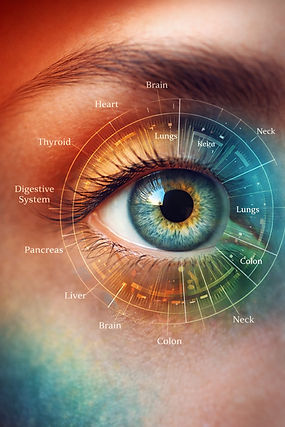
Iridology Defined
Your eyes are more than windows to the soul — they are also maps of your inner health.
Iridology is the study of the iris (the colored part of the eye) and how its patterns, colors, and markings may reflect your body’s strengths, tendencies, and areas that could benefit from extra support. Rather than focusing on symptoms alone, iridology offers a broader view of how your body is functioning as a whole.
This page is designed to help you understand what iridology is — and what it is not — so you can make informed, empowered choices about your health.
By learning to notice patterns in the eyes, iridology encourages small, consistent lifestyle shifts that support balance, resilience, and long-term well-being.
What Is Iridology?
Iridology is a non-invasive, observational practice that looks at the iris to identify genetic predispositions, constitutional strengths, and areas of potential imbalance in the body.
While iridology does not diagnose disease or replace medical care, it can offer insight into how different systems of the body — such as digestion, circulation, stress response, elimination, or inflammation — may be responding to daily life.
Think of iridology as an early awareness tool.
It helps highlight where the body may be asking for more support before stress or imbalance becomes louder.
Used alongside lifestyle guidance, nutrition, nervous system regulation, and health coaching, iridology supports a more proactive and preventative approach to wellness.
Why People Find Iridology Helpful
Many people turn to iridology when they:
Feel “off” but can’t get clear answers
Want to understand their body beyond lab numbers
Prefer gentle, whole-person approaches
Are seeking prevention rather than crisis care
Iridology helps connect the dots — offering insight that supports informed, body-aware decisions.
Why Clear Iris Photos Matter
Iridology is an observational practice. The insights it offers are based on visible patterns, colors, and textures within the iris.
Clear, well-lit images help ensure these details can be seen accurately. Blurry photos, glare, shadows, or low resolution can make it difficult to observe subtle markings and may limit the usefulness of the session.
Taking a clear iris photo supports the integrity of the process and helps ensure the experience is intentional, supportive, and aligned with how iridology is meant to be used — as a wellness awareness tool, not a medical diagnosis.
👉 Before uploading your image, please watch this short demonstration video showing how to take a clear, usable iris photo.
[Watch how to take your iris photo]